
By Deirdre Liebman
Jane Austen, who was born in Hampshire, England, on December 16,1775, the seventh child of the Reverend George Austen and his wife, Cassandra, is one of Britain’s most celebrated authors. Despite dying at the young age of 41, she wrote six romantic novels in her lifetime, two of which, Northanger Abbey and Persuasion, were published posthumously. 2025 marked the 250th anniversary of Austen’s birth, making this the perfect time to explore her two most well-known works: Sense and Sensibility and Pride and Prejudice.
Sense and Sensibility, Jane Austen’s first published book, tells the story of Elinor and Marianne Dashwood. Upon their father’s death, the Dashwoods’ estate and almost everything they own is inherited by their half-brother, and they are forced to live with distant relatives. Elinor’s reserved and tactful nature contrasts with Marianne’s impulsive and passionate ways as both sisters navigate life, love and heartbreak.
Pride and Prejudice, (originally titled First Impressions) Jane Austen’s second major novel, is set in early nineteenth century, rural England. The story focuses on the middle-class Bennet family, particularly Mrs. Bennet’s attempts to successfully marry her five teenage daughters. Its protagonist, the spirited Elizabeth Bennet, was Jane Austen’s favourite of her own heroines.
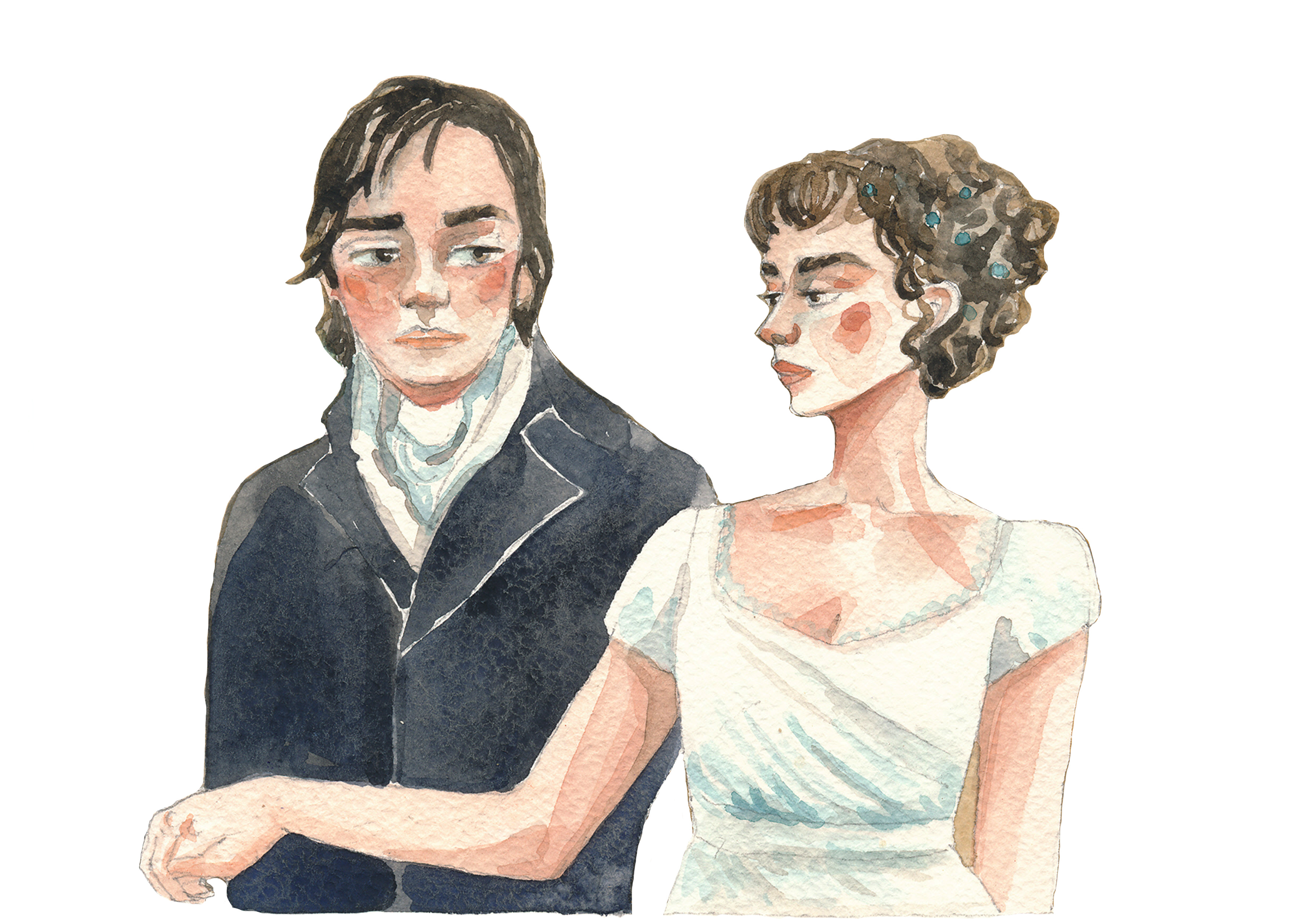
Despite having been written over 200 years ago, modern readers can easily relate to Austen’s timeless characters. They are a varied and diverse group of people, ranging from snobby aristocrats to the Bennets’ and Dashwoods’ friends and extended family, who include soldiers, clergymen and middle-class merchants. Tactless Mrs. Bennet, frivolous Lydia and calculating Fanny could just as easily be found in twenty-first century London as in an 1810 drawing room. And who wouldn’t fall for the devilishly charming John Willoughby?
Although the books contain themes and personalities which have not changed over the years, women’s lives have altered significantly over the course of two centuries. In both books, the Bennets’ and Dashwoods’ estates are “entailed,” which means that they can only be inherited by a male. Therefore, the Dashwoods are evicted from their home upon the death of their father, and the Bennets live in constant fear of their patriarch dying and losing their home. In Pride and Prejudice, Mrs. Bennet emphasizes the importance of marrying “well”, to her daughters. She wants them to choose a husband who has enough money to support not only his wife, but also her sisters, because English society did not enable women to support themselves financially without a husband.
If you are looking for a classic novel which mirrors our society today and reveals its hypocrisy and foolishness through clever wordplay and satire, look no further.