By Ava Rosenthal
Right now, we are living in a golden age of science, with technology rapidly advancing, astonishing innovations in medicine such as gene editing, and breakthroughs in quantum mechanics and cosmology. The recent Artemis II aims to send humans farther from Earth than they have travelled in decades.
However, the scientists who further this incredible progress often remain unrecognised by the general population. Although our current progress is exciting, we still need to encourage both this generation and the next to contribute to human progress, and bring science into the mainstream culture. The Breakthrough Prize can do this.
The Breakthrough Prize is the world’s largest science prize and is often referred to as ‘The Oscars of Science’ because of its connection to the many celebrities who present and participate in the award ceremony. It was founded by Sergey Brin, Priscilla Chan and Mark Zuckerberg, Yuri Milner and Julia Milner, and Anne Wojcicki in 2012.
Its aim is to present scientists as heroes of our society and to show that science deeply benefits humanity, both practically and fundamentally, by tapping into that essential part of human nature: curiosity.
The prize also seeks to bring science into mainstream culture, often through its connection with celebrities, and to inspire the next generation of scientists.
Each year, the organisation awards six $3 million prizes to scientists who have made remarkable breakthroughs in the previous year during a major ceremony. The prize has three categories: mathematics, fundamental physics, and life sciences. This year, the ceremony took place on 18 April in Los Angeles.
As well as the main prize, the Breakthrough Prize also has an initiative open to anyone between the ages of 13 and 18: the Breakthrough Junior Challenge. The challenge is to create a short video explaining a concept in either mathematics, physics, or life sciences. The video must not be longer than two minutes and can take any form, including documentary, dramatic, or animated styles. It may also use simulations and diagrams. The videos are then judged according to criteria including engagement, illumination, creativity, and difficulty.
Every year, one winner is chosen and awarded a $250,000 post-secondary scholarship, $50,000 for the teacher who inspired them most, and a $100,000 science laboratory for their school. This year, the winner of the Breakthrough Junior Challenge was Matea Cañizares, a 17-year-old student from Ecuador. Her video explained the concept of quark–gluon plasma in the early universe.
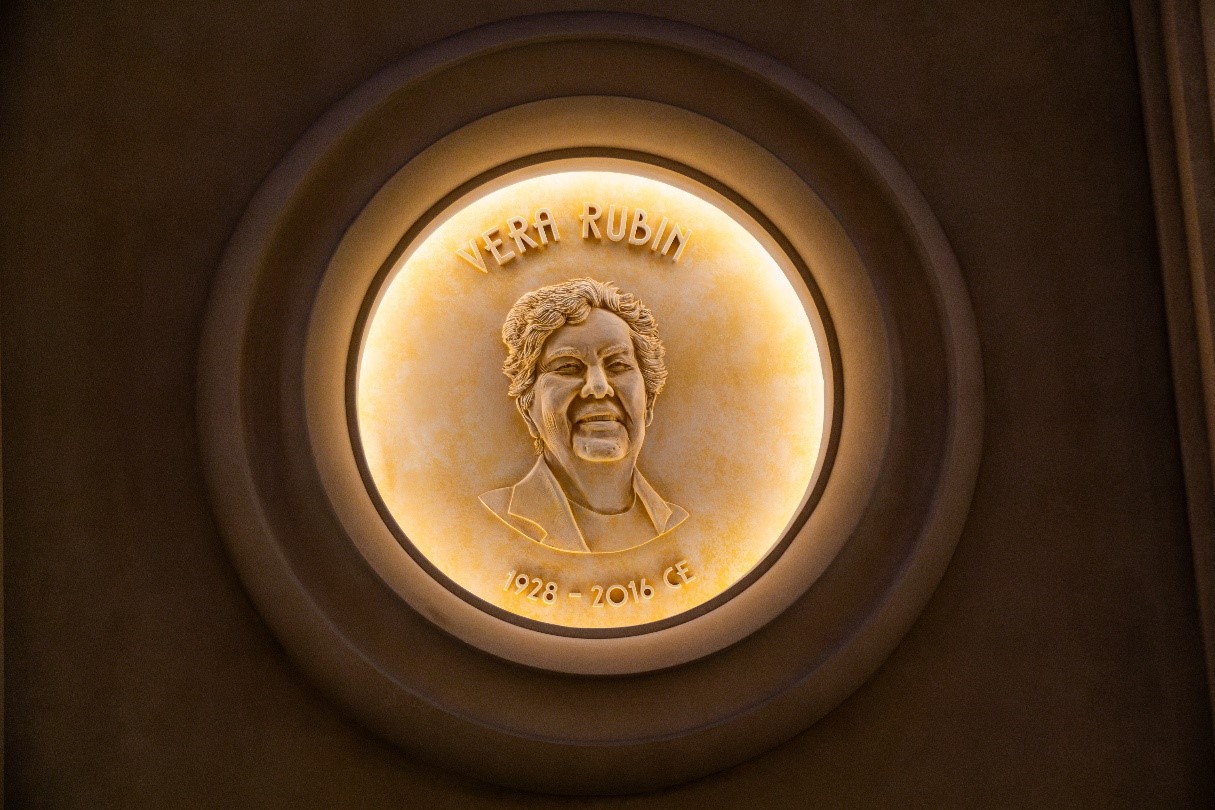
Three additional prizes are awarded to early-career scientists: the Maryam Mirzakhani Prize, the New Horizons Prize, and, most recently, the Vera Rubin Prize. The Maryam Mirzakhani Prize – named after Maryam Mirzakhani, the first woman ever to win a Fields Medal – awards $50,000 to early-career female mathematicians. The New Horizons Prize awards $100,000 to early-career mathematicians and physicists. The Vera Rubin Prize, created this year in honour of the astronomer Vera Rubin, who helped discover dark matter, awards $50,000 to early-career women in physics and astrophysics.
The Breakthrough Prize has recognised some extraordinary accomplishments in science and mathematics this year. From the first FDA-approved gene replacement therapy to advancements in nonlinear evolution equations (equations that express complex and dynamic motion, such as the movement of fluids or heat), this year’s entries have demonstrated remarkable scientific progress.
Perhaps if we are inspired by the prize’s mission and by the scientists who have fulfilled it, we too can contribute to human knowledge and, in turn, benefit humanity.