By Hana Nakatani
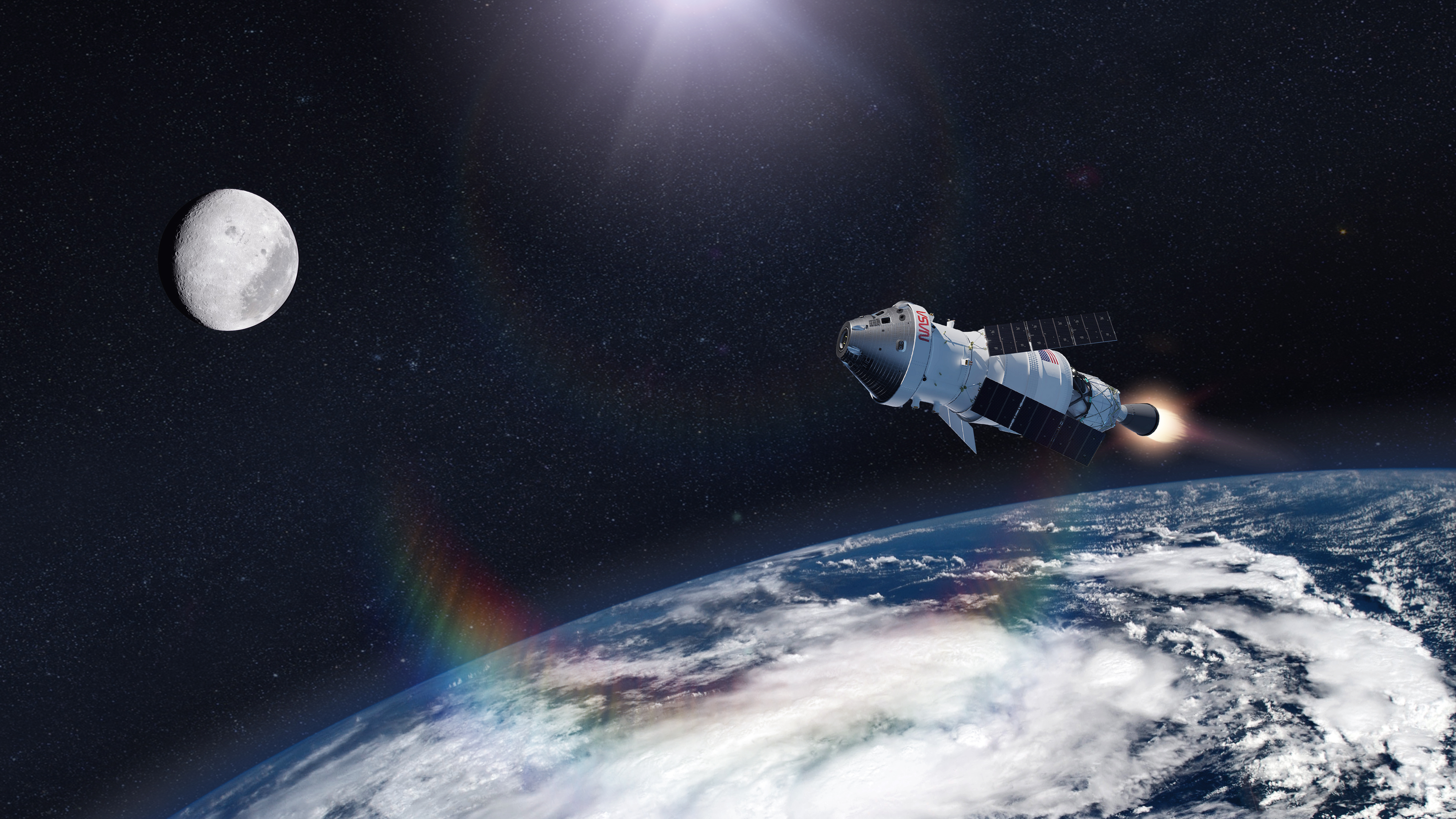
On April 1st, the Artemis II mission was launched after more than half a century of technological development. Four NASA astronauts departed from the Kennedy Space Center in Florida aboard the Orion capsule. I travelled to Houston to witness this historic moment.
At the Johnson Space Center, the atmosphere felt like a fiesta. Live camera coverage was running 24 hours a day, and everyone, including staff and visitors, came together in support of the Artemis mission. It was truly a privilege to take part.
The launch had originally been scheduled for mid-February but was postponed due to several technical issues, including a hydrogen fuel leak.
The crew returned to Earth on April 10th after entering lunar orbit on the fourth day and reaching the farthest distance from the Moon ever achieved by humans. Artemis I, conducted in 2022, was an uncrewed mission that orbited the Moon. Artemis II is the first crewed lunar mission of the 21st century.
Although the American and Canadian crew did not land on the Moon, the mission aimed to test life support systems, flight routes, and communication systems in preparation for a human landing by 2028.
According to NASA, a minor technical issue with the onboard restroom occurred shortly after launch. However, it was quickly resolved by the mission control team in Houston in coordination with the crew. On the second day, Orion continued its journey toward the Moon, aiming to reach the farthest point in human spaceflight history.
This mission was remarkable because it included the first woman and the first black man to go into lunar orbit. In Artemis II there were three main roles for astronauts: commander, pilot, and mission specialist.
The commander leads the crew, makes final decisions, and communicates with Mission Control. The pilot helps lead the mission and controls the spacecraft during important phases. The mission specialist manages onboard systems, runs tasks, and supports the crew during the mission. In Artemis II, there is one commander, one pilot, and two mission specialists.
Now, let me introduce you to the Artemis II crew.
Reid Wiseman (Commander): Reid Wiseman is a NASA astronaut and former U.S. Navy pilot. He flew on the International Space Station in 2014, where he spent about six months in space. He later served as Chief of the Astronaut Office before being selected as commander of Artemis II.
Victor Glover (Pilot): Victor Glover is a NASA astronaut and U.S. Navy test pilot. He flew on SpaceX Crew-1 to the ISS in 2020, becoming the first Black astronaut to live on the space station for a long-duration mission. Artemis II was his second spaceflight.
Christina Hammock Koch (Mission Specialist): Christina Koch is a NASA astronaut and engineer. She spent 328 days aboard the ISS, setting a record for the longest single spaceflight by a woman. She also took part in the first all-female spacewalk.
Jeremy Hansen (Mission Specialist): Jeremy Hansen is a Canadian astronaut and former fighter pilot. Selected by the Canadian Space Agency in 2009, Artemis II was his first spaceflight. He was the first Canadian to travel around the Moon.