By Roisin O’Dwyer
What is a conspiracy theory?
According to the BBC, a conspiracy theory is a belief that a secret but influential group, such as a political party, is controlling events behind the scenes. Experts in this field have concluded that conspiracies often reject scientific evidence, are encouraged by prejudice or paranoia, and can gain momentum in times of uncertainty.
What are some common conspiracies?
Conspiracies have been interwoven throughout our society since historical times, with the earliest beliefs linking to the death of Roman emperor Nero in 68 AD. Some believed his death was faked and he would one day return to reclaim his throne. As human psychological needs have increased and technology has progressed, conspiracies have gained greater influence and have become more accepted as potential truths. Examples embedded within modern society include beliefs that the royal family arranged Princess Diana’s death, the 1969 US moon landing never happened, Paul McCartney died in 1966 and was replaced, or that birds have been replaced by robotic drones used to monitor citizens.
Why do people believe in them?
While some view these theories as absurd, for others they offer reasonable explanations and a sense of comfort in the face of monumental events. Research shows that approximately 60% of the British public believe in at least one conspiracy theory, with younger people and those with lower levels of education being more likely to do so. A 2025 study also found that 78.6% of Americans believe in at least one conspiracy theory, with the most common being that Lee Harvey Oswald did not act alone in the assassination of John F. Kennedy (65%) and that the US government was involved in the 9/11 attacks (20%).
Researchers have confirmed that conspiracies are distorted reflections of society that stem from a combination of factors: human psychological needs, social influences, and the media. Psychological factors include personality traits such as hostility, paranoia, or anxiety, which can make individuals more prone to believing conspiracies because they provide a sense of control and security. Research published in Psychological Bulletin stated, “Many turn to conspiracy theories to fulfill deprived motivational needs and make sense of distress.”
Conspiracy theories also thrive on cognitive biases, such as proportionality bias, which leads people to believe that significant events must have complex causes. Some find it unsettling to accept that tragic events occur without deeper meanings. Another major influence is confirmation bias, where people focus on information that supports their existing beliefs while dismissing evidence that contradicts them.
Social factors also play a role. Belonging to a community of people with similar beliefs can create feelings of unity and empowerment, especially for individuals who feel ignored or disadvantaged compared to more powerful societal groups. These communities can also foster a sense of superiority, as members often believe they have uncovered a “hidden truth” about society.
The third major factor is social media. Research shows that around 75% of Americans believe social media is the main tool through which conspiracies are spread. Many platforms prioritise entertaining or attention-grabbing content, such as conspiracies, over reliable information. In addition, people who strongly believe in conspiracies tend to engage with media that reinforces their views, further strengthening their beliefs.
How are they heightened by crises?
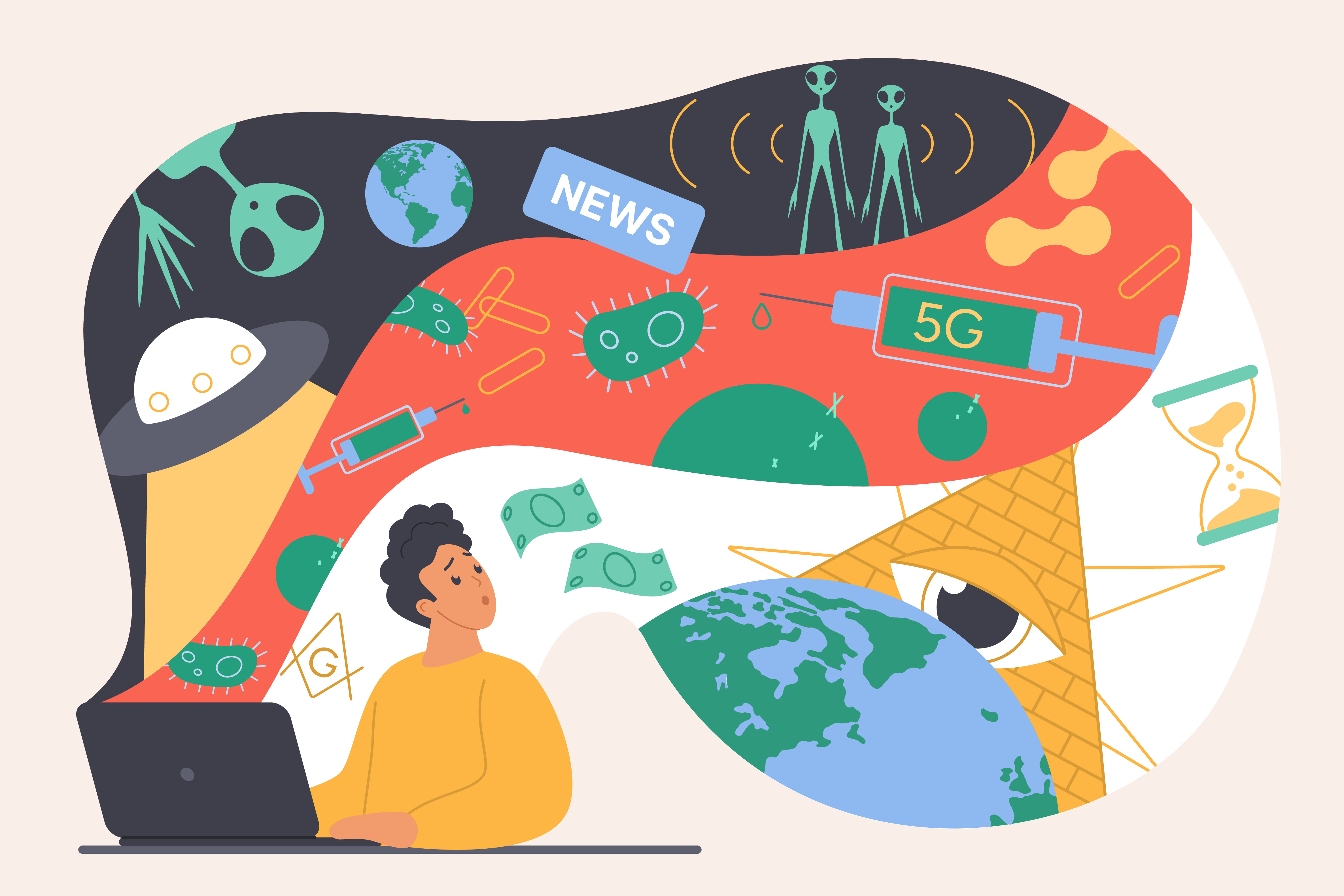
These three factors help explain why people are drawn to conspiracy theories, and research shows that beliefs become even stronger during times of crisis. In uncertain situations, humans naturally seek security and understanding, especially when scientific evidence is limited. Researchers note that this happened during the COVID-19 pandemic, when false conspiracies about vaccines circulated widely—such as claims that vaccines altered human DNA or implanted microchips to track citizens. Although these theories were later disproven, they gained significant momentum during lockdown and fuelled resistance to vaccination.
Therefore, whether you choose to believe in conspiracies is subjective. So next time you encounter something online that sounds absurd, ask yourself: “Is this really true, or just a distorted reflection of the tropes of our society?”